Wednesday, July 31, 2013

Official: Toyota, Nissan, Honda, Mitsubishi will collaborate on charging network in Japan

Toyota, Nissan, Honda and Mitsubishi Agree to Joint Development of Charging Infrastructure for PHVs, PHEVs and EVs in Japan

TOKYO, Japan (July 29, 2013) - Toyota Motor Corporation, Nissan Motor Co., Ltd., Honda Motor Co., Ltd., and Mitsubishi Motors Corporation jointly announced their agreement to work together to promote the installation of chargers for electric-powered vehicles (PHVs, PHEVs, EVs*1) and build a charging network service that offers more convenience to drivers in Japan.

The move is in recognition of the critical need to swiftly develop charging infrastructure facilities to promote the use of electric-powered vehicles. Assisted by subsidies provided by the Japanese government, the four automakers will bear part of the cost to install the charging facilities. They will also work together to build a convenient and accessible charging network in collaboration with companies that are already providing charging services in which each of the four automakers already have a financial stake.

At present, there are about 1,700 quick chargers and just over 3,000*2 normal chargers in Japan, which is generally recognized to be insufficient. In addition, the lack of sufficient coordination among existing charging providers can be improved to offer better charging service to customers. The government announced subsidies for installation of charging facilities totaling 100.5 billion yen as part of its economic policy for fiscal year 2013 to quickly develop the charging infrastructure and expand the use of electric-powered vehicles using alternative energy sources. Currently, each prefecture in Japan is drawing up a vision for the use of the subsidies. With this strong support, the four automakers will work together to install the chargers. Previously, each automaker assessed possible locations for charging facilities on their own. Now, they have agreed to work jointly under the common understanding that the charging infrastructure has public value and that enhancing it should be done quickly during the limited period that the subsidies are available.

Currently, there are three charging methods for electric-powered vehicles: basic charging, where a car is charged at private homes or condominiums; destination charging, where a car is charged at locations such as shopping malls, DIY stores and family restaurants for the return trip home; and en-route charging at locations including expressway roadside service areas, roadside stations (michi no eki), gas stations, and convenience stores. In both destination and en-route charging, normal charging is suitable for longer-duration stops, while quick charging is appropriate for shorter stops.

In terms of utility, PHVs and PHEVs would benefit from an expanded charging network because it would maximize these vehicles' EV driving performance and combined fuel economy. EVs, which provide an emissions-free, clean driving experience, could harness a larger charging network to extend their range during longer trips.

Under the agreement, the four companies will launch a joint project to work on the following actions:

1. Promote installation of chargers in Japan
Studies are underway to increase the number of normal chargers by 8,000 and quick chargers by 4,000. Normal chargers could be installed in commercial facilities (e.g. large shopping malls, do-it-yourself stores and family restaurants), which are destination charging spots or en-route charging spots with longer duration stops (e.g. highway service areas and roadside stations) when a vehicle could be charged. Quick chargers are to be installed at en-route charging spots for shorter-durations stops (e.g. highway parking areas, convenience stores and gas stations).

2. Promote charger installation by temporarily bearing part of the installation and maintenance costs

3. Build a charging infrastructure network which enables customers to use their PHVs, PHEVs and EVs more conveniently

Collaboration among companies currently providing charging services in which each automaker has already invested (Japan Charge Network Co., Ltd., Charging Network Development, llc and Toyota Media Service) would lead to the creation of a more convenient charging infrastructure network. One example is enabling the car's owner to charge his or her car at any charging spot with the same card.

4. Work with government agencies and local governments
Electric-powered vehicles are the driving force of alternative energy initiatives. The government aims to expand the use of the next-generation of these vehicles and have PHVs, PHEVs and EVs achieve a ratio of 15 to 20 percent of new car sales in 2020. The four automakers are committed to developing a charging infrastructure for a more user-friendly infrastructure and to contribute to creating a society where electric-powered vehicle use can maximized.

Source: http://green.autoblog.com/2013/07/30/toyota-nissan-honda-mitsubishi-will-collaborate-on-charging-n/

Regions Bank ny times Boston Marathon Results pangolin Ball Bearings Macklemore irs forms

Hutton: Merrillville grad Ken Carter plugging away with his golf tour

Merrillville High School graduate Ken Carter sits his basement office while running Michigan Player Tour golf organization. | phoprovided

Merrillville High School graduate Ken Carter sits in his basement office while running the Michigan Player Tour golf organization. | photo provided

storyidforme: 52841182
tmspicid: 19556041
fileheaderid: 8913430

Ken Carter is a carpenter, a golfer and a man committed to stubborn dreams.

It?s a strange, refreshing, sometimes melancholic mix of traits.

In the last event on the Michigan Players Tour, where Carter is the founder and executive director, there were six golfers in the field. Ten were scheduled to play but three withdrew and there was one no show.

First place paid out $375 and second $250.

There are seven tournaments this year. All of them are in Northern Michigan. It is Carter?s favorite place in the world, a place where the water is so clear that you can see a full body reflection of yourself on a sunny day.

?We have a light schedule,? he said. ?We didn?t have a good year last year.?

Carter has run the MPT since 2006 and he hasn?t yet had a great year. He points to 2009 as his best year. There were 19 events that year and a pay-out of $14,300. He lists 19 players on his money list that year, with the top earner making $3,100.

With the sluggish economy and a general appetite for golf that is trending down, not up, the MPT is a tough sell.

But Carter, who graduated from Merrillville High School in 1975 as a self-made all-conference player and more or less talked his way onto the legendary Houston golf team that included Fred Couples, Jim Nantz, Ed Fiori and Nick Faldo (briefly), is unmoved by the year-in-and-year-out lethargy that has enveloped the tour.

He can?t get any major sponsors.

He has never made money on the venture.

The schedule is subject to change abruptly, based on participation.

And he guarantees himself at least one brutally long day a week when he runs a tournament, sometimes driving four hours to an event.

?The way I conceived this, I wanted to have a single-A tour,? he said. ?There was nothing here for guys. They?d play leagues, drink a few beers and go home.?

There are layers of professional golf that exist only in the small world of the players, who in some form, are chasing the PGA dream.

Just below the PGA, is the Web.com Tour (formerly the Nationwide) and just below that is the eGolf Tour. Carter wanted a place just below eGolf. He would be happy to have that. He thought Michigan was ripe for it. They had lots of golf courses, lots of good players and an environment that wasn?t as crowded with good players, like Florida or Arizona or California, where most of the mini tours are located.

It hasn?t happened ? yet.

Will it ever? That?s not the point for Carter, who has no plans at all to give into the forces that are working against him.

?I remember when I told a bunch of my friends about talking to my PGA friends about the tour,? he said. ?They asked if they laughed at me??

The derision doesn?t bother him. This is a man who left Merrillville after high school for Houston to work construction because his father had moved there.

At lunch time one day, he decided he wanted to give college golf a whirl. So, he hopped in his car and knocked on the office door of Dave Williams, the world famous golf coach of the Cougars, and asked if he could try out for the team.

Carter had no idea that Houston had won 12 national titles or that its roster was filled with future PGA players.

To his surprise, Williams was impressed with his gumption. He told Carter to get a haircut and they?d talk about it.

He let Carter play, mostly it seems because he asked and he was good to have around. Carter participated in two junior varsity tournaments in his Cougar career. While guys like Fiori and Blaine McCallister were running all over the country in the summer, playing in the Western Amateur and qualifying for the U.S. Amateur, Carter was working his construction job. It was too late for him to be really good.

?I just never had the pedigree,? he said.

His experience with Williams, which he later viewed as almost a random act of kindness, changed him forever. He spent several years kicking around the mini tours before taking a job at the Academy of Golf at Hills of Lakeway, where teachers like Dave Pelz and Clay Edwards worked. Carter tried for several years to make the tour, but he gave up on the dream for good in 1990, mostly because he couldn?t find a sponsor.

The thing about the MPT is that Carter knows exactly what those guys are feeling when they compete. It doesn?t matter if it?s seven or 17 or 27 players. They believe, in some, highly private part of their soul, that if they just had the money or the support or if the conditions and resources were right, they could play one day with the big boys. They really do.

Carter wants to nurture that dream for these guys and keep it alive, no matter what the cost. He has been there and he still dreams about it, too.

?It hasn?t amounted to much,? he said of the tour. ?But we still get players. We?re still a public company. Once you step out and put your reputation on the line, you have to follow through. You can?t ever give up.?

He won?t either. He took some time off earlier this year, to take care of his ailing mother. He?ll hit the road early on Aug. 5 for the Jackson Open in Jackson, Mich., which is his next event. It?s not clear from the website if anyone has signed up yet.

Source: http://posttrib.suntimes.com/sports/21629293-556/hutton-merrillville-grad-ken-carter-plugging-away-with-his-golf-tour.html

us open tennis Empire State Building shooting Republican National Convention Karlie Redd guild wars 2 adrian gonzalez Jerry Nelson

Osbourne: Bieber 'doesn't realize he's white'

Celebs

2 hours ago

IMAGE: Sharon Osbourne

Virginia Sherwood / NBC

Sharon Osbourne doesn't mince words when it comes to giving her opinion of other famous people.

Sharon Osbourne isn't afraid to give her honest opinion on anything -- or anyone. In a blunt interview with The Daily Beast, the TV personality and wife of rocker Ozzy Osbourne offered up her take on various musicians, including Justin Bieber.

"I feel really bad for him," Osbourne said of the teen pop sensation. "There?s this little kid with a huge dream, he?s cute, girls love him, and he wants to be a mean boy, and he?s about as mean as a (expletive) kitten, and he?s trying to act out."

Osbourne referred to Bieber infamously urinating in a mop bucket in a nightclub kitchen earlier this year while his friends laughed and filmed the event.

"It?s like, 'Oh, we?re the bad boys!' she said. "(Expletive) off! You don?t know what bad is. And I think that he?s lost, I really do. I think he doesn?t realize he?s white and not black, that?s a huge problem. And, at the point he?s at in his career, it?s so dangerous because we?ve seen it all before a million times. Where do you go when you?re a child entertainer and then you want to transition to be a man? Very few make it."

Osbourne also gave the interviewer her opinion on various other famous faces.

"I have no time for (Kanye West)," she said of the musician and Kim Kardashian baby daddy. "He bores me." But she had only praise for singers Taylor Swift and Justin Timberlake.

Osbourne also had kudos for Angelina Jolie's decision to have a preventive double mastectomy upon learning she carried a gene making her highly likely to develop breast cancer. Osbourne herself had that same operation in 2012 upon learning she also had the gene.

"But my situation is nowhere near what Angelina?s was," she said. "She had lost her mother and her aunt to it, and she has all those babies to take care of. I?ve had my life, and she hasn?t yet."

Osbourne had nothing good to say about New York mayoral candidate Anthony Weiner, whose second sexting scandal has made headlines lately.

"You?re a grown man with a great education, and you think, in this day and age, you can send pictures of your penis over the Internet and not get caught? " Osbourne said. "Now, how (expletive) stupid are you? What makes him think that he has a sense of freedom to do that?"

Source: http://www.today.com/entertainment/sharon-osbourne-justin-bieber-doesnt-realize-hes-white-6C10791074

kevin systrom fibonacci sequence maryland lottery grand jury ozzie guillen fidel castro darvish george zimmerman website

Pope?s First Trip Abroad Changes View of Church

Pope Francis? first trip abroad, to Brazil, is being hailed as a success by prelates of the Roman Catholic Church. Critics say that so far, however, the new pope has brought a change of style, not substance.

He carried his own bag during his travels, and he visited a slum in Rio de Janeiro.

And his message to his young followers sounded downright subversive.

?Be revolutionaries. I ask you to swim against the tide. Yes, I am asking you to rebel.? he said.

On his way back to Rome, the pope spoke to reporters at length about difficult issues, including gay priests.

?If a person is gay and seeks the Lord and has good will, who am I to judge him," he asked.

The pope did not negate Church teaching that homosexuality is a sin. But his words do reflect a more compassionate approach to controversial issues than that of his predecessors.

Jon O?Brien, president of Catholics for Choice, which opposes the church?s ban on abortion and contraception, said, ?It feels good as a Catholic to have a leader who?s not again talking to us about why we can?t use condoms; again he?s not beating up on gays; or he?s not saying that women who have abortions are bad.?

He said the rhetoric, though, needs to be followed by real change.

?And we?re not seeing a lot of movement by Pope Francis, about changing some of the teachings that are hugely problematic for Catholics,? he said.

Still, Francis' first trip abroad suggests that he has a way with large crowds of the faithful, not seen since the papacy of John Paul II.

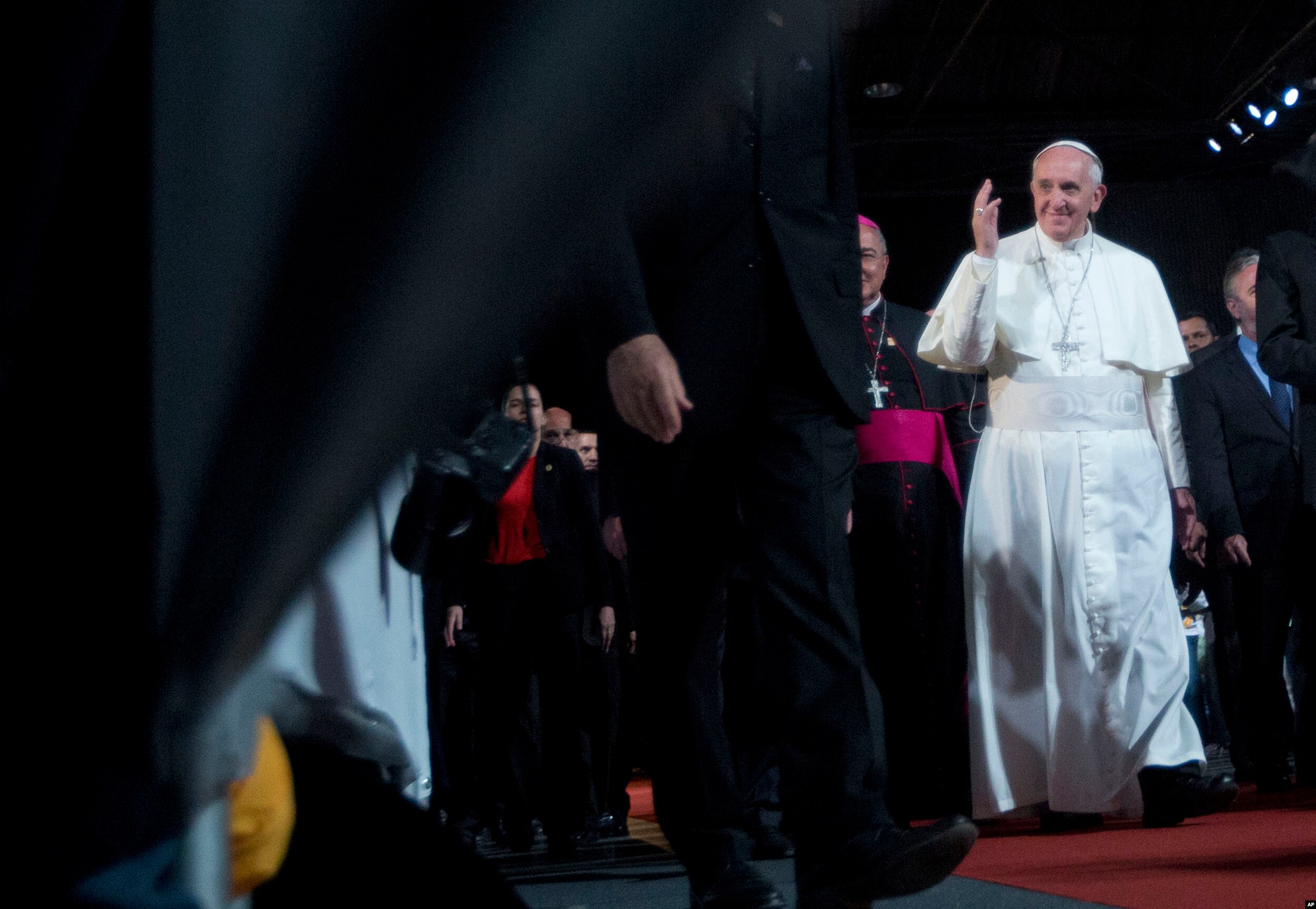
  • Pope Francis arrives to a farewell ceremony at the Rio de Janeiro airport, July 28, 2013.

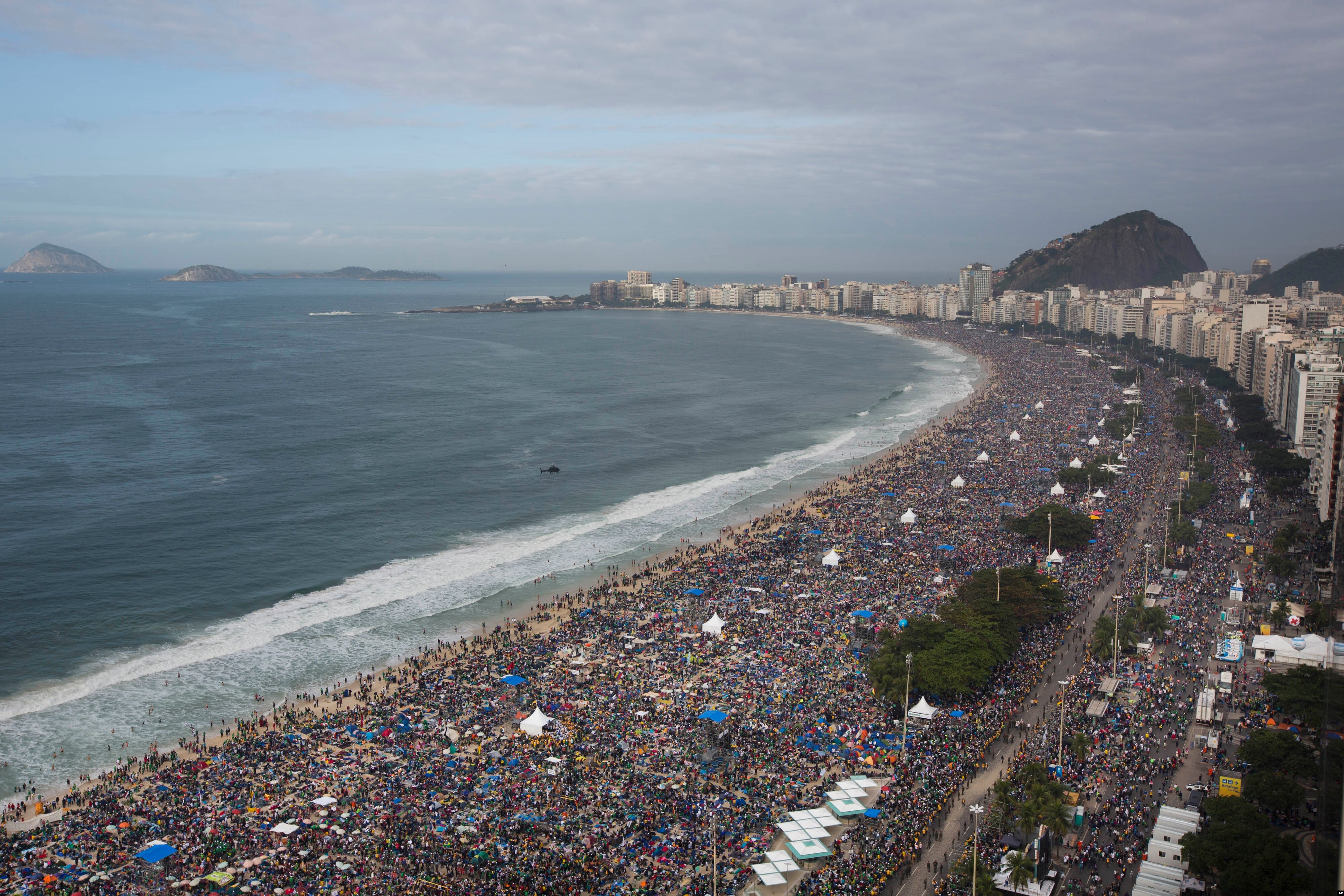
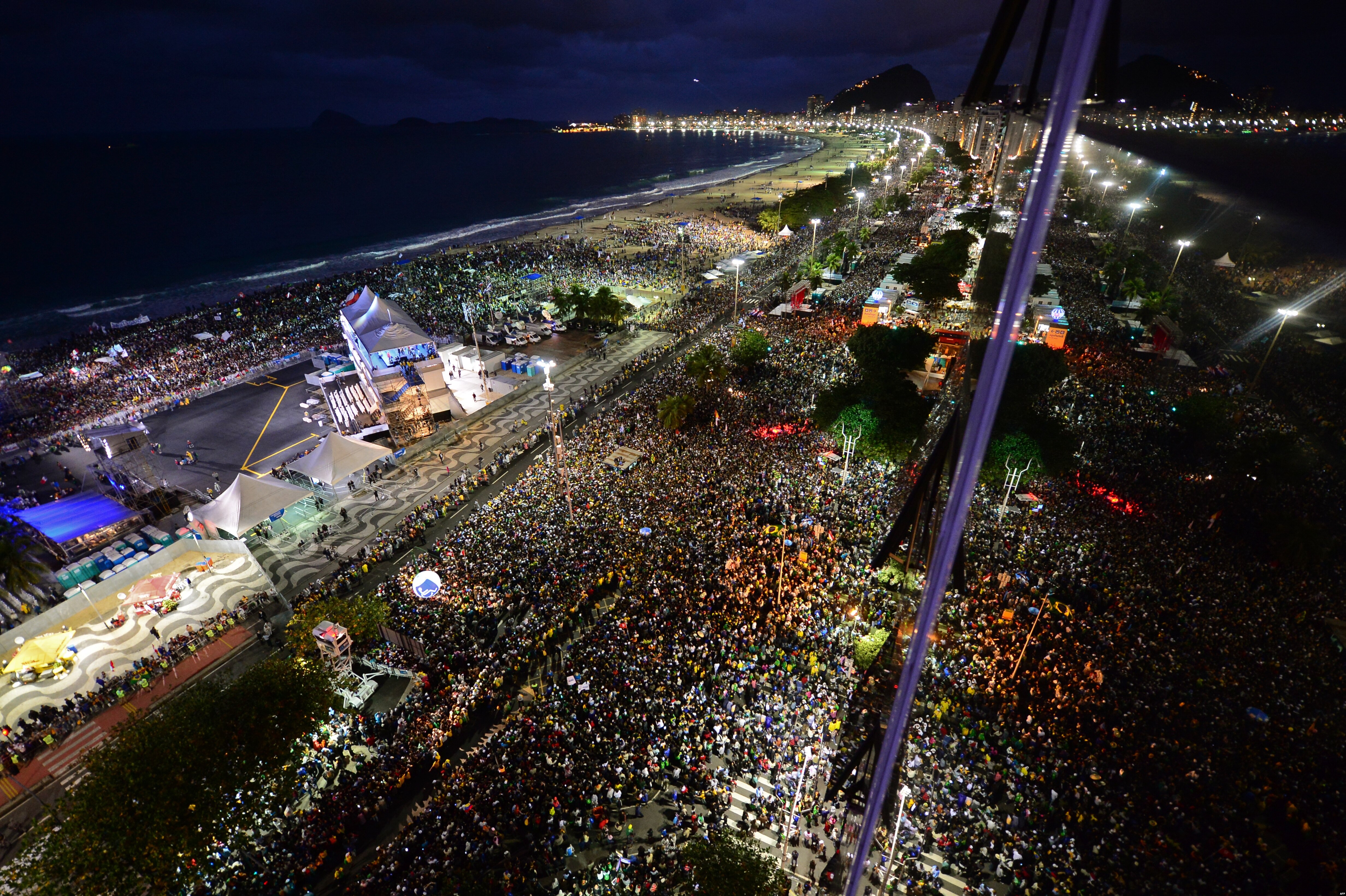
  • People pack Copacabana beach in Rio de Janeiro for Pope Francis' final mass for World Youth Day, July 28, 2013.

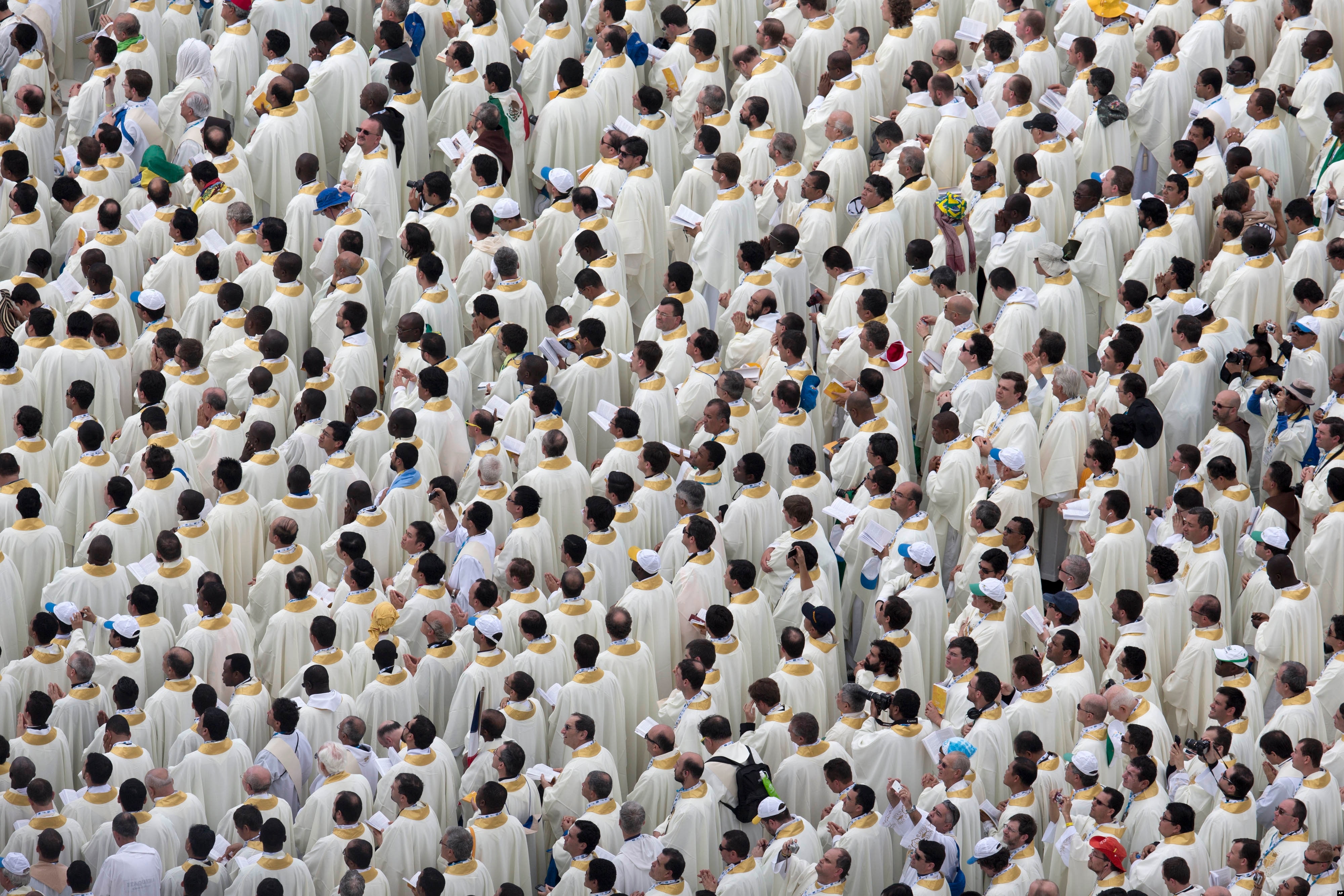
  • Clergy attend a Mass celebrated by Pope Francis on the Copacabana beachfront, in Rio de Janeiro, July 28, 2013.

  • A pilgrim wakes up after a night of vigil in Copacabana beach in Rio de Janeiro, July 28, 2013.

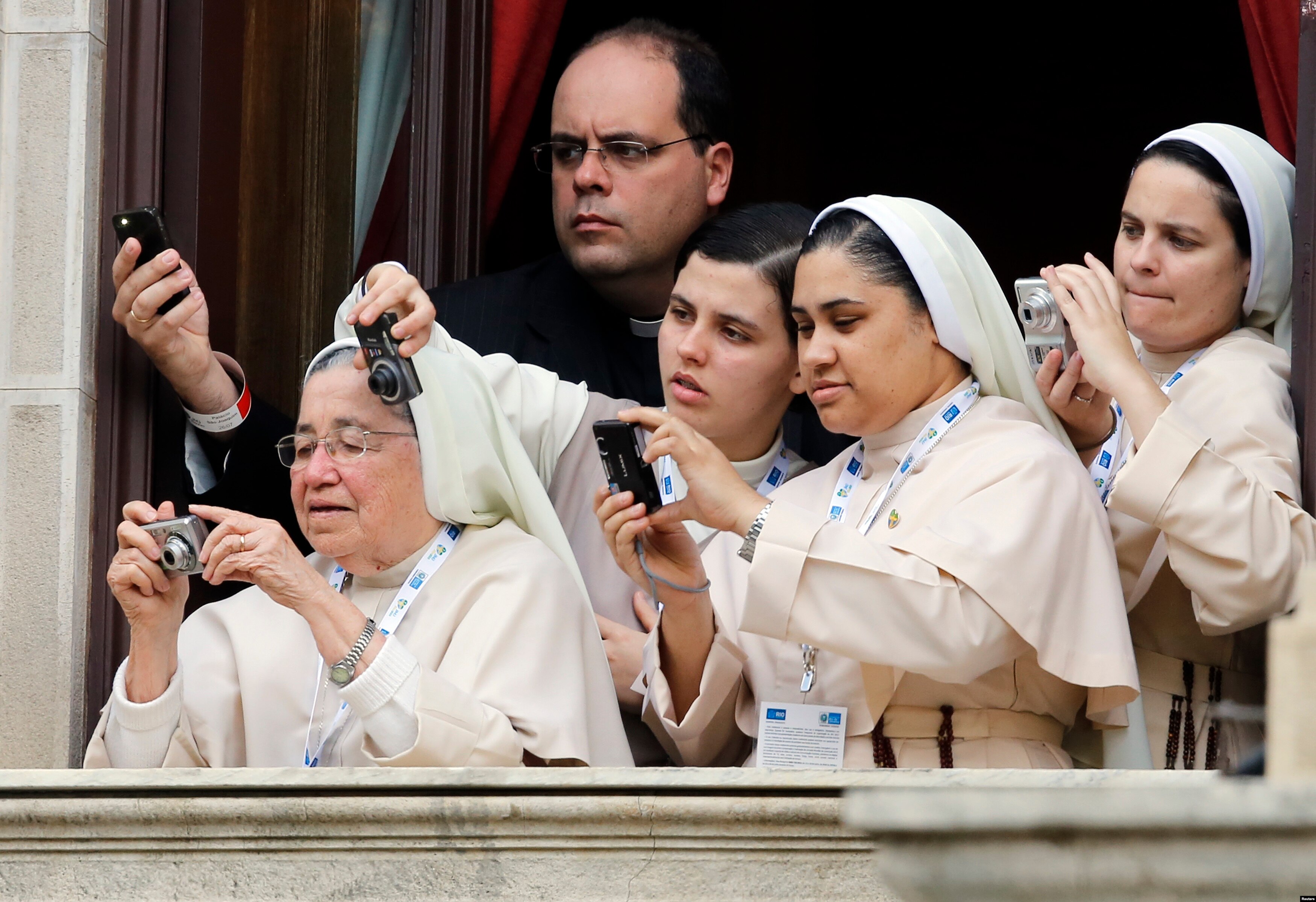
  • Nuns and a priest take pictures as Pope Francis arrives at Sao Joaquim Palace in Rio de Janeiro, July 26, 2013.?

  • Thousands of young people gather at Rio de Janeiro's iconic Copacabana beachfront on July 25, 2013 for the welcoming of Pope Francis to World Youth Day ceremonies.

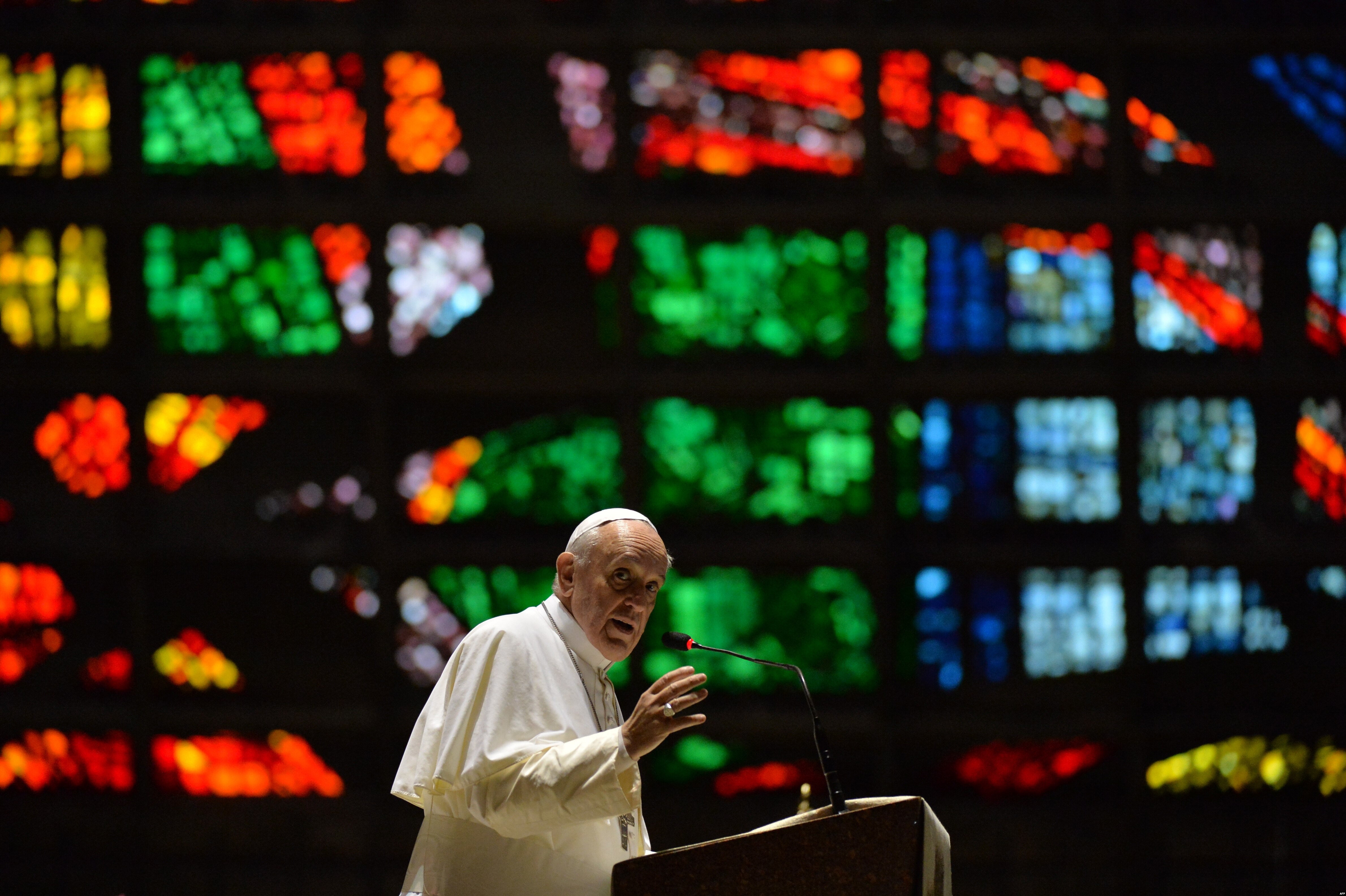
  • Pope Francis delivers a speech during a visit to the Cathedral of Rio de Janeiro, July 25, 2013.

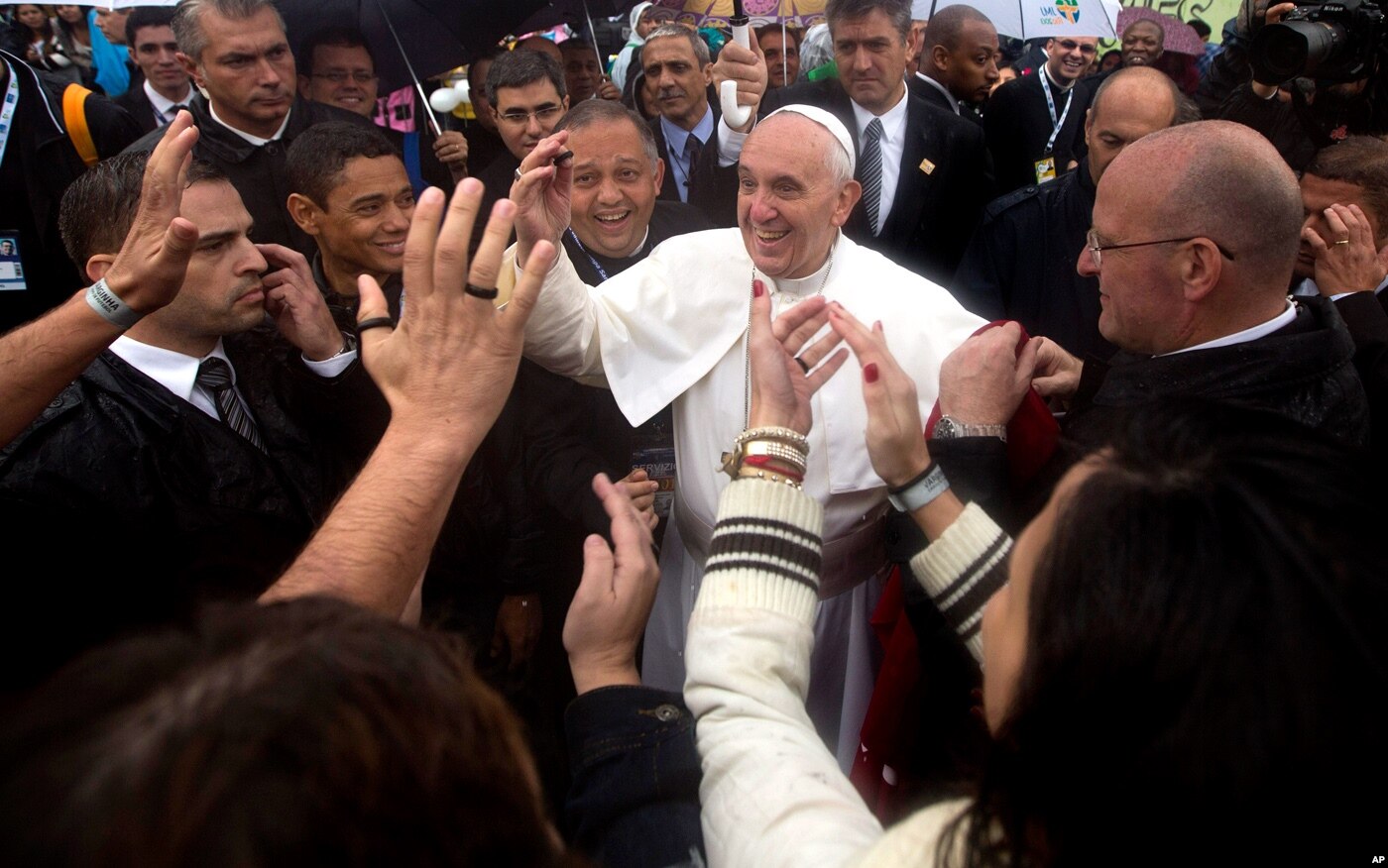
  • People greet Pope Francis as he visits the Varginha slum in Rio de Janeiro, Brazil, July 25, 2013.

  • A crowd waits for the Pope ?to arrive at the Varginha slum in Rio de Janeiro, July 25, 2013.

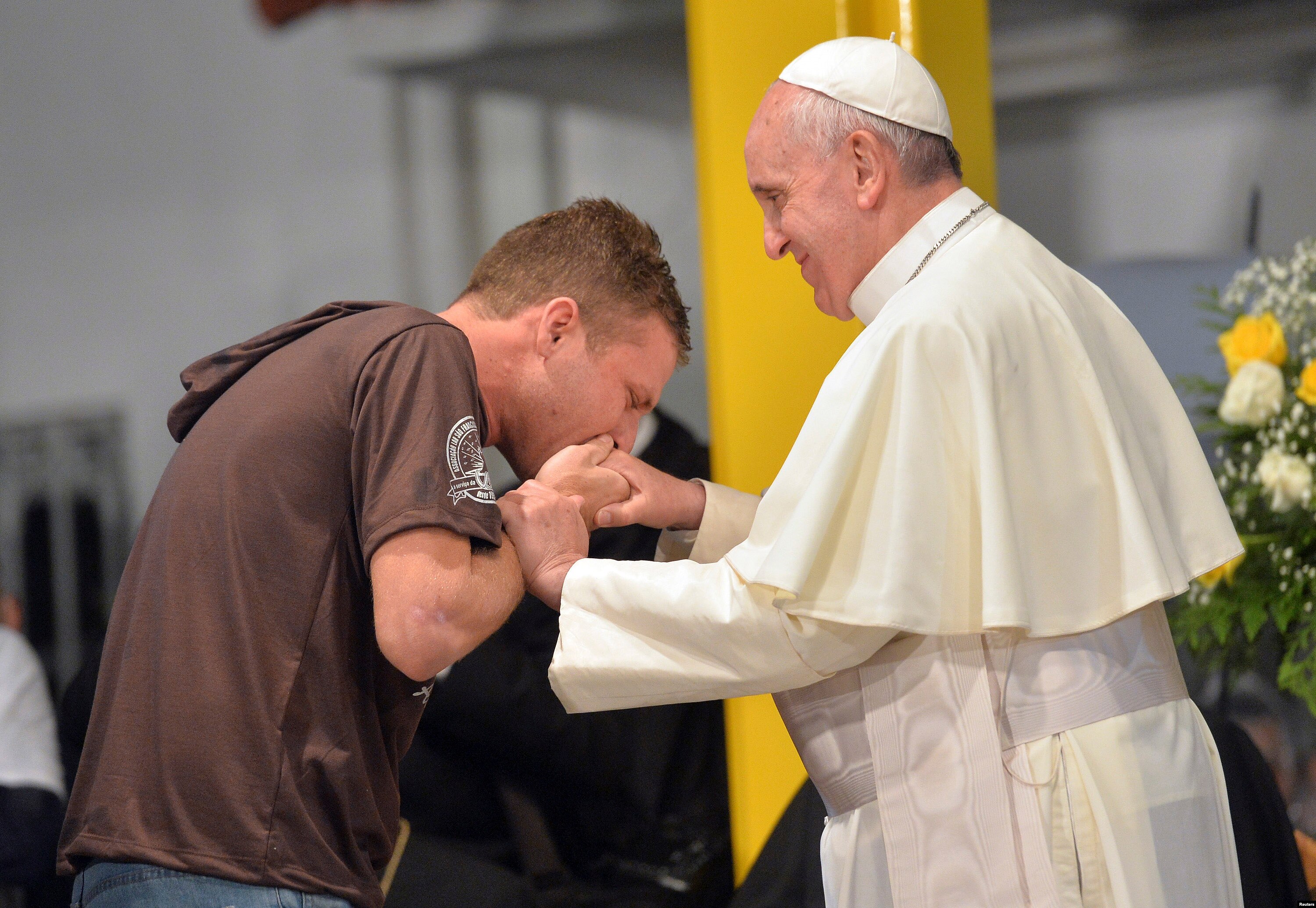
  • A patient kisses the hand of Pope Francis at the Hospital Sao Francisco in Rio de Janeiro, July 24, 2013.

  • Thousands of young pilgrims gather on Copacabana Beach for a World Youth Day Mass in Rio de Janeiro, Brazil, July 23, 2013.

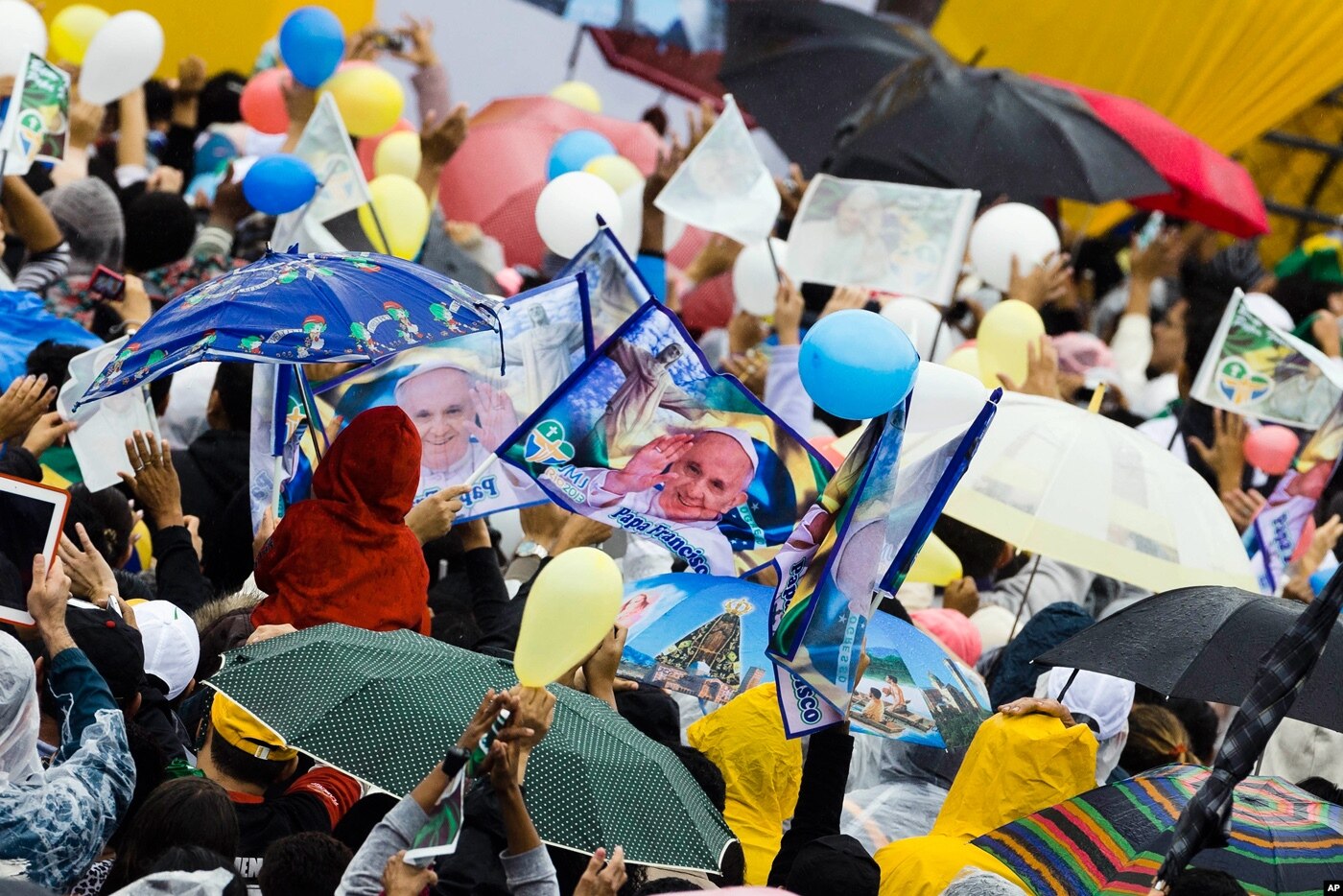
  • Pope Francis greets the crowd of faithful from his popemobile in downtown Rio de Janeiro, July 22, 2013.

  • Youth from France, Venezuela and Canada who are in Brazil for World Youth Day events sing songs as they ride in a train that travels to Corcovado mountain where the statue Christ the Redeemer stands over Rio de Janeiro, Brazil, July 23, 2013.

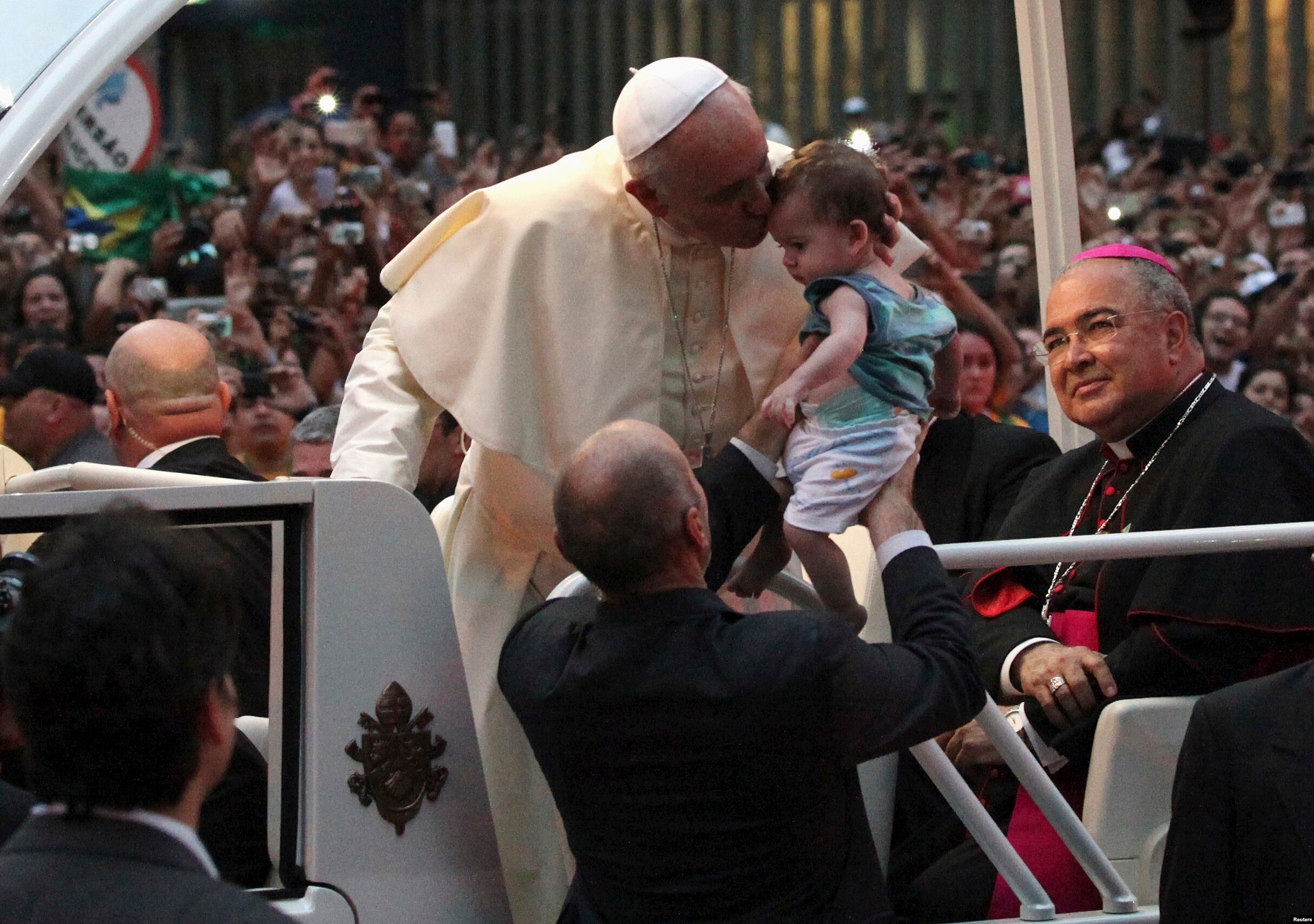
  • Pope Francis kisses a baby while greeting the crowd of faithful from his popemobile in downtown Rio de Janeiro, July 22, 2013.

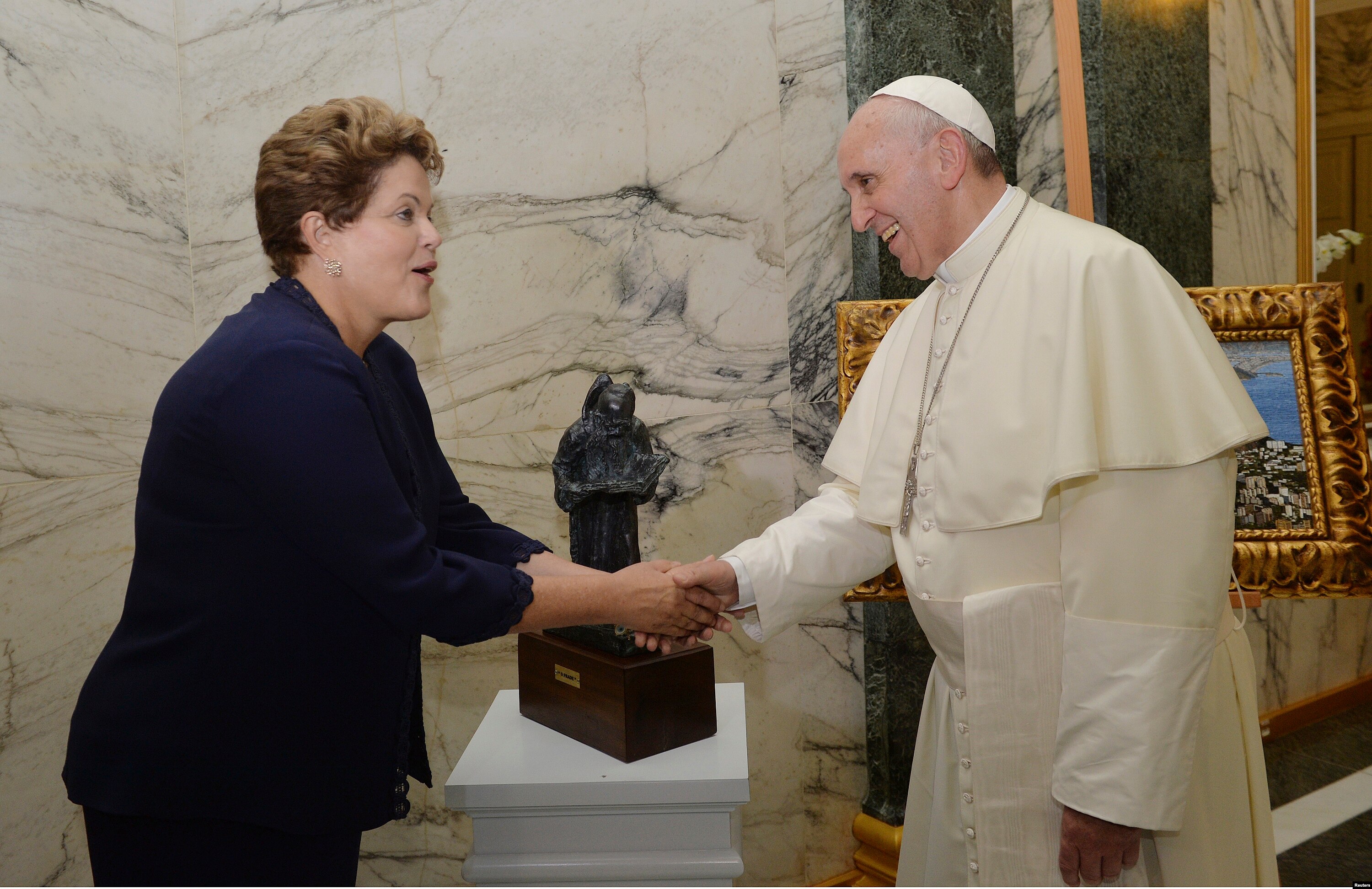
  • Pope Francis shakes hands with Brazilian President Dilma Rousseff after receiving a painting of Rio de Janeiro during a welcoming ceremony in Rio de Janeiro, July 22, 2013.

Source: http://www.voanews.com/content/pope-francis-first-trip-abroad-changes-view-of-catholic-church/1712601.html

Marcus Lattimore Tyrann Mathieu nfl draft grades Jon Jones Broken Toe matt barkley russell westbrook NFL Draft Grades 2013

Sunday, July 28, 2013

Syrian refugees in Lebanon face suspicion

BEIRUT (AP) ? They're lightweight, easy to assemble and have covers that are supposed to keep you cool in the summer and warm in the winter. The U.N. refugee agency wants to test these individual housing units with an eye toward using them as shelter for Syrians fleeing their country's civil war.

But the plan is meeting stiff resistance from Lebanese officials, who fear that elevating living conditions for Syrian refugees ever so slightly will discourage them from returning home once the fighting ends. That frustrates aid organizations who are desperately trying to manage the massive refugee presence across the country.

Lebanon's refusal to set up any kind of organized accommodation for tens of thousands of Syrians ? including refugee camps or government-sanctioned tent sites ? is a reflection of its own civil war demons. It underlines the nation's deep seated fear of a repeat of the 1975-1990 war, for which many Lebanese at least partly blame Palestinian refugees.

Many regard the Syrians with suspicion and are worried that the refugees, most of them Sunni Muslims, would stay in the country permanently, upsetting Lebanon's delicate sectarian balance and re-igniting the country's explosive mix of Christian and Muslim sects.

"It's the fear of everything permanent, or semi-permanent, because of the Palestinian experience in Lebanon," said Makram Maleeb, a program manager for a Syrian refugee crisis unit at Lebanon's Ministry for Social Affairs.

"Any move toward a camp situation is quite worrisome because it suggests a permanent situation for the refugees," he told The Associated Press.

Palestinians living in Arab countries ? including the 450,000 in Lebanon ? are descendants of the hundreds of thousands who fled or were driven from their homes in the war that followed Israel's creation in 1948. They remain in Lebanon's 12 refugee camps because Israel and the Palestinians have never reached a deal that would enable them to return to their homes that are now in Israel.

The civil war in Syria, now in its third year, has killed more than 100,000 people and uprooted millions from their homes. Many fled to Iraq, Turkey, Jordan and Lebanon, a short drive away from the capital, Damascus.

On any given day in Lebanon, hundreds, sometimes thousands, of refugees arrive in cars loaded with children and belongings. Their presence has swelled the country's population of 4.5 million by a fifth. It's an astounding statistic for the tiny country and represents the highest number of refugees per capita of any country in the region.

Officials say an estimated 1.2 million Syrians are now in Lebanon ? including some 620,000 registered refugees. Most arrived over the past eight months.

With the government providing none of the facilities and land that authorities in Turkey, Jordan and Iraq have allocated for the refugees, many Syrians in Lebanon live in appalling conditions, finding shelter in slums, tents and tin shacks strung with laundry lines and wedged between farm lands outside towns and cities.

On a casual walk in Beirut, one finds Syrians sheltering in underground parking lots, under bridges and old construction sites with no running water, sanitation, electricity or protection from Lebanon's sizzling summers and its freezing winters.

"The kids get sick all the time here," said Raghda, a 48-year-old mother of eight, living in an abandoned police station in the eastern Lebanese town of Majdal Anjar, along with 21 other relatives. They are crammed into three rooms without proper sanitation or clean water.

About 10 percent of the refugees are accommodated in unfinished private houses, and others live in garages, shops and collective shelters, according to the UNHCR. Most of them ? over 80 percent ? rent accommodation that costs more than $200 a month on average.

Lebanese officials say they are aware of the magnitude of the crisis, the health risks involved and the possibility that deepening resentment of refugees among the hosting population could turn into an armed conflict inside Lebanon as the civil war drags on in Syria.

Still, they insist the government will not approve any plans for setting up refugee camps or sanction erecting any kind of structure specifically designed to accommodate refugee families on Lebanese soil no matter who designs it and who pays for it.

"It's distressing and everyone is feeling anxious, wondering if they will ever go back as the fighting goes on and on and on," Maleeb said.

Still, he said it was unlikely the housing unit would be approved.

Ninette Kelley, UNHCR representative in Lebanon, said the refugees "desperately want to return home." But having people live in appalling conditions will not force them out of Lebanon before the fighting stops in Syria, she said.

"'There is this psychological worry that if people are put in a semi-permanent structure, they will never leave," Kelley told the AP. They will leave, she said, adding that one of the greatest impediments of going home after the fighting ends is not having a place to live in Syria.

The 17.5-square-meter (yard) refugee housing unit would offer a family of five a "more dignified life in exile," said Kamel Deriche, UNHCR's operations manager in Lebanon, and enables refugees to dismantle it, pack it and carry it home to reuse as a temporary accommodation until their family home is rebuilt.

Compared to a tent, which has to be replaced every three to four years, the unit's life span is expected to be up to seven years. And the price of about $1,000 per unit makes it more economical, Deriche said.

"It's not a permanent structure and we are not establishing camps by any stretch of the imagination," Kelley said, adding that the unit would be only one of several shelter options for the agency to use.

A prototype of the prefabricated house designed by the Swedish furniture manufacturer IKEA has been sitting in the front yard of UNHCR's Beirut headquarters for a month.

The agency has been lobbying Lebanese officials for permission to try out 15 units over a period of six months before they can be deployed, but so far to no avail. UNHCR also intends to test the units in climate conditions of northern Iraq and in Ethiopia, Deriche said.

Lebanese officials say the historic connotation of a tent for refugees, let alone a housing unit, weighs heavy on the nation that is still reeling from the devastating 15-year civil war. The Syrian fighting has frequently spilled over into Lebanon over the past two years, deepening tensions between pro- and anti-Syrian politicians, who have been unable to form a new government since the prime minister resigned in March.

"There will be no camps and family shelters, wooden or pre-fabricated, whatsoever in Lebanon," said Maleeb, the government official.

Anything to do with the Syrian refugees, he added, is "a big political decision, and one that cannot be taken by a caretaker government."

___

Associated Press correspondent Diaa Hadid contributed to this report.

___

Follow Barbara Surk at www.twitter.com/BarbaraSurkAP .

Source: http://news.yahoo.com/syrian-refugees-lebanon-face-suspicion-063558546.html

trisomy 18 ozzie guillen ozzie guillen buster posey eric holder eric holder carole king

SAC Capital pleads not guilty to insider-trading charges

By Bernard Vaughan

NEW YORK (Reuters) - Steven Cohen's hedge fund, SAC Capital Advisors LLP, pleaded not guilty in federal court on Friday, one day after it was indicted on insider-trading charges.

The firm's general counsel, Peter Nussbaum, flanked by five defense lawyers, entered the plea before U.S. District Judge Laura Taylor Swain in New York.

U.S. prosecutors on Thursday charged the $14 billion hedge fund with presiding over a culture where employees flouted the law and were encouraged to tap their personal networks for inside information about publicly traded companies.

Government-obtained evidence includes "court-authorized wiretaps" and "a large number of electronic recordings," such as emails and instant messages, Antonia Apps, an assistant U.S. attorney who has prosecuted other insider-trading cases, told the judge.

"In short, a tremendous volume," Apps said of the evidence.

Apps also said that the government would provide the bulk of its evidence to SAC within 30 days.

Ted Wells, a lawyer representing SAC Capital, said he was "most concerned" with obtaining statements that former SAC Capital employees gave to the government. Wells, who said he has had discussions with prosecutors, told the judge the defense was entitled to the evidence as it prepares its case.

Apps said it was not clear that the statements would have to be turned over to SAC lawyers.

Wells did not name anyone, but several former employees, including Noah Freeman, Jon Horvath, Donald Longueuil and Wesley Wang, have already pleaded guilty to charges of criminal insider trading. No criminal charges have been brought against Cohen.

Swain did not decide the issue but set a September 24 court date to discuss evidence.

SAC's illegal practices ran roughly from 1999 to 2010, according to the indictment. SAC and various affiliates were charged with four criminal counts of securities fraud and one count of wire fraud.

Prosecutors also filed a civil case seeking forfeitures and money laundering penalties.

The charges came a week after the U.S. Securities and Exchange Commission charged Cohen in a civil case with failing to supervise two employees, Mathew Martoma and Michael Steinberg. Both men have pleaded not guilty to criminal insider trading charges and face trials in November.

Prosecutors are expected to ask the SEC to stay those proceedings while it pursues the criminal case.

The main victims of SAC's alleged crimes are "large companies...whose confidential information was stolen and traded upon," Arlo Devlin-Brown, another assistant U.S. attorney, told Swain.

Suspect trades mentioned in the indictment include Cohen's August 2008 sale of a $12.5 million stake in Dell Inc, within 10 minutes after receiving an email warning that someone at the computer maker had said the company's earnings would disappoint.

SAC's lawyers on Friday included: Wells, Daniel Kramer and Michael Gertzman of Paul, Weiss, Rifkind, Wharton & Garrison; and Martin Klotz and Michael Schachter of Wilkie Farr & Gallagher.

Jonathan Gasthalter, a spokesman for SAC, declined to comment.

(Reporting by Bernard Vaughan. Additional reporting by Sarah N. Lynch, Emily Flitter; Editing by Gerald E. McCormick, Jeffrey Benkoe and Leslie Gevirtz)

Source: http://news.yahoo.com/sac-capital-pleads-not-guilty-insider-trading-charges-144753000.html

Mark Sanford Ray Harryhausen elizabeth smart chipotle Shakira Amanda Berry Farrah Abraham Sex Tape